What We Do
- Home
- What We Do
Check Out
What We Do
Here are a brief about what we do at Nigeria Humanitarian Action..,

Provision of Grants
In other to address funding gap for most national humanitarian/development institutions in Nigeria and help them achieve their core mandates, the Nigeria Humanitarian Action (NIHA) created the National Grant Scheme for Humanitarian Actor (NAGRASH).
0%
NAGRASH is a funding mechanism that provides grants to eligible institutional members of NIHA that are registered with Humanitarian Shared Opportunity (HUSHOP).
Funding for the Scheme is sourced through multi sourced instruments in line with funding and sustainability framework of the Nigeria Humanitarian Action (NIHA). NAGRASHI is in fulfillment of one of NIHA core mandates, which is to facilitate and coordinate funding Policy Instrument aimed at Supporting Humanitarian Activities, National Emergency and development institutions statewide.
NAGRASHI shall at all times leverage on its privileges as domiciliary organization of the Save the Future of the African Child (SFAC) to access funding privileges available from the M-MASS Savers Fund

HUSHOP
Facilitating Networking, Information and Data Gathering and Management
The Humanitarian Shared Opportunity (HUSHOP) is NIHA networking, information, data gathering and management mechanism. It is set up to provide networking platforms and bridge the gap in information, data gathering and management with the Nigeria Humanitarian/development agencies. HUSHOP is digital directory/data-base that captures the essential information of state and non-state actors in humanitarian and development framework, it also provides forum for networking, Information, data gathering and management with the goal to disseminate such data within the various Sector and with External Agencies.

Our Partners
Collaboration and Partnership
As a principal interface organization, the Nigeria Humanitarian Action (NIHA) engages in strong collaboration and partnership with sector stakeholders to drive initiatives and build support instruments for overall program success, this is in line with its core mandate to collaborate and partner in implementing social enterprises and humanitarian Initiatives carry out both by state and non-state actors through effectiveness of operations




Capacity Building & Institution Strenthening
In line with our vision in the Nigeria Humanitarian Action (NIHA) to build Institutional capacity and ensure sustainable hope through humanitarian institution and development interventions; we provide capacity building and institutional strengthening mechanism for individuals and institutions working within the framework of our core objectives. At the level of individuals, we deliver services that build knowledge and skills, influence attitudes and positively influence the working practices. At the institutional level our approaches are a bit different given the complex nature of institutional change-management; much of our effort at this instance is delivered through longer-term formal and on-the-job training, coaching, consultative workshops and information-sharing seminars at an institutional level. Our long term objective is to engage the state and non-state institutions in refocusing and streamlining the structure, processes, management resources and abilities of the organization, in order that it is better able to perform the tasks and responsibilities assigned to it.
A fundamental and challenging aspect of this process is ensuring that the improvements made are absorbed and sustainable beyond the life of the intervention. In this respect, many of the problems we encounter can be directly linked to a lack of generation of sufficient revenue, which impacts negatively on the entire structure and activities of the institution.
Therefore, if we are to make changes sustainable, we have to build the link between revenue and sustainability. Thus, we place significant emphasis on working with members to seek new ways to generate income as part of our capacity-building services. At the end, our goal for Institutional
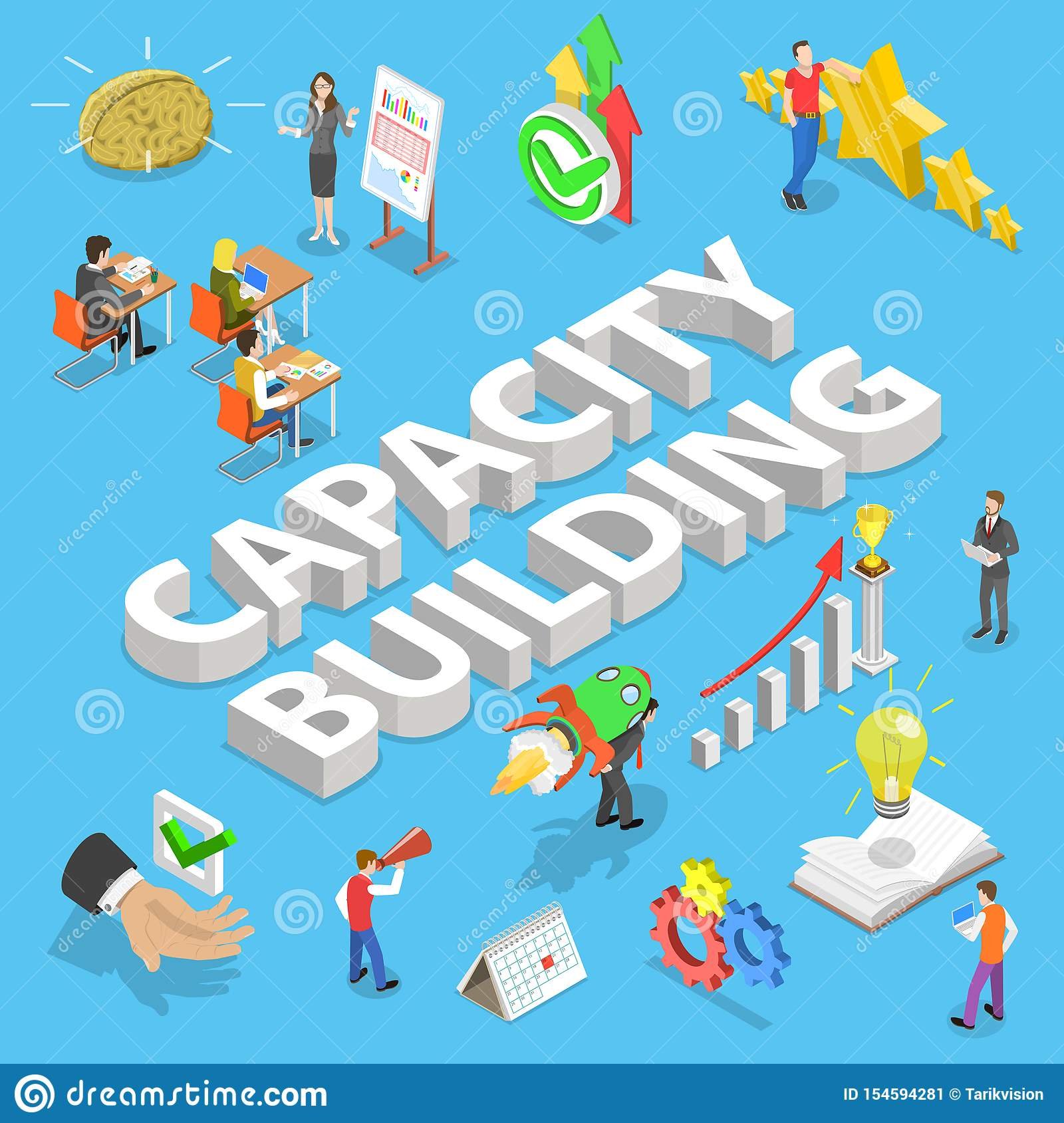
Capacity Building is to addresses capacity building beyond the provision of education and training of professionals. It aims to enhance the capacity of state and non- state actors to manage operation and program cost efficiently and effectively. All training and other capacity building mechanism will be administered through the Humanitarian Institute a sister organization of (NIHA) and a domiciled institution of Save the Future of the African Child (SFAC)
0%
Research and Development (R&D)
At NIHA, Research and Development rarely involves technological breakthroughs or science and engineering feats, for us R&D usually means researching issues that affect the state and non-state actors within the humanitarian and development framework and developing programmes that fit the changing realities around our area of coverage. In doing this we help our members and stakeholders in the sector stay a step ahead of change, which, in turn, helps ensure that their services are responsive to real and current needs.
Our R&D goals as a principal interface organization is centered on understanding basic issues and root problems, tracking major trends and external changes, Identifying unmet programmes and service needs, weighing the pros and cons of alternative solutions and evaluating the effectiveness of existing programs. Further to this end, as critical tool in the social sector in several ways we become agitators to preserve and improve what works expand and innovate beyond what works, and socially explore new alternatives to fits into contemporary solutions to current challenges.
In fulfillment our mandate to research and develop, monitor and evaluate national policy framework for the effective delivery of humanitarian and social services, we manage:
- • The National Humanitarian Need Assessment System – (NAHNAS).NAHNAS is tailored to research and collate data and information from the 774 area councils and 8809 wards in Nigeria, its core mandate is to provide periodically reviewed provide digital information system that will guild and enhance funding, program priorities and operation efficiency for sector stakeholders. Access to data and information is through the Humanitarian. Shared Opportunity (HUSHOP) Quadrennial Nigeria Humanitarian Development Policy Discourse, whose mandate is to develop and periodically review Nigeria Humanitarian Development Framework 2021 – 2046 Publish the NIHA Report - a quarterly publication and Nigeria Humanitarian Year Book amongst others
Advocacy & Awareness
In the Nigeria Humanitarian Action (NIHA), our broad base advocacy and awareness mandate involves identifying the issue, developing solutions, building support, and bringing issues, solutions, and political will together to ensure that the desired change takes place. It also involves monitoring and evaluating the entire process of humanitarian and social enterprise in a bid to help sheathing programme and institutional exposure..
Our Advocacy podium in NIHA is a change catalyst that provides our members and stakeholders with the tools, voice and platforms in which they can effect change around their program area. We deploy our advocacy strategies in principle of advocacy charter through clarity of purpose.

These principles are embodied in our advocacy and awareness aims and objectives capture in the under listed them:
- • Independence
- • Confidentiality
- • Person Centered Approach
- • Empowerment
- • Equal opportunity
- • Accountability
- • Accessibility

Gate Keeper – Monitoring and Evaluation (M&E) Mandate
Our patriotic mandate as gate keeper is expressed through the Nigeria Humanitarian Action (NIHA) National Monitoring and Evaluation mechanism (NMEM). The mandate of NMEM is to pro- vide an open access system that guarantee’s – operational integrity, transparency, accountability and probity for all state and non-state actors within the humanitarian and development sectors in Nigeria.
NIHA through NMEM shall at all-time use constitutional means to pursue its gate keepers mandates using NMEM which includes: Process monitoring,
Compliance monitoring, Context monitoring, Beneficiary monitoring, Financial monitoring, Organizational monitoring, Results monitoring, Evaluation process, impact, outcome and summative through which the overall effectiveness of international, national and community programs are monitored and evaluated to determine if the projects are being run as intended and if it is reaching the intended audience. NMEM shall review, rate and make far reaching recommendation to beneficiaries and benefactors – local and international on both institutional and program status.
Our Intervention and Special Project are carried out through NIHA Programme Agencies. Our Programme Agencies are but not limited to:
- Programme Agency on Health
- Programme Agency on Environment
- REACHOUT Humanitarian Need and Emergency Response Programme Agency
- The Ground Zero Programme Agency
- Programme Agency on National Monitoring and Evaluation Mechanism (NNEM)
- Information Technology Programme Agency
- Development Programme Agency
- Food and Agriculture Programme Agency
- Education, Scientific and Cultural Exchange Programme Agency (ESCEPA)
- National Grant Scheme for Humanitarian Actors - NAGRAS
These agencies are in response to our national need assessment report per time. The intervention and special project carried out through these Agencies cut across all critical humanitarian need areas statewide. The under listed are programmes under the NIHA Programme
Quick Links
Other Pages
Contact Info
- No. 89 Ahmed Joda Crescent, Kado Estate, Abuja
- (+234) 092917270
- info@niha.ng
Newsletter
To subscribe to our weekly Newsletter about latest trends in the humanitarian sector, input your email address below…
Copyright © 2021 www.niha.ng. All rights reserved.
Designed By TIG